


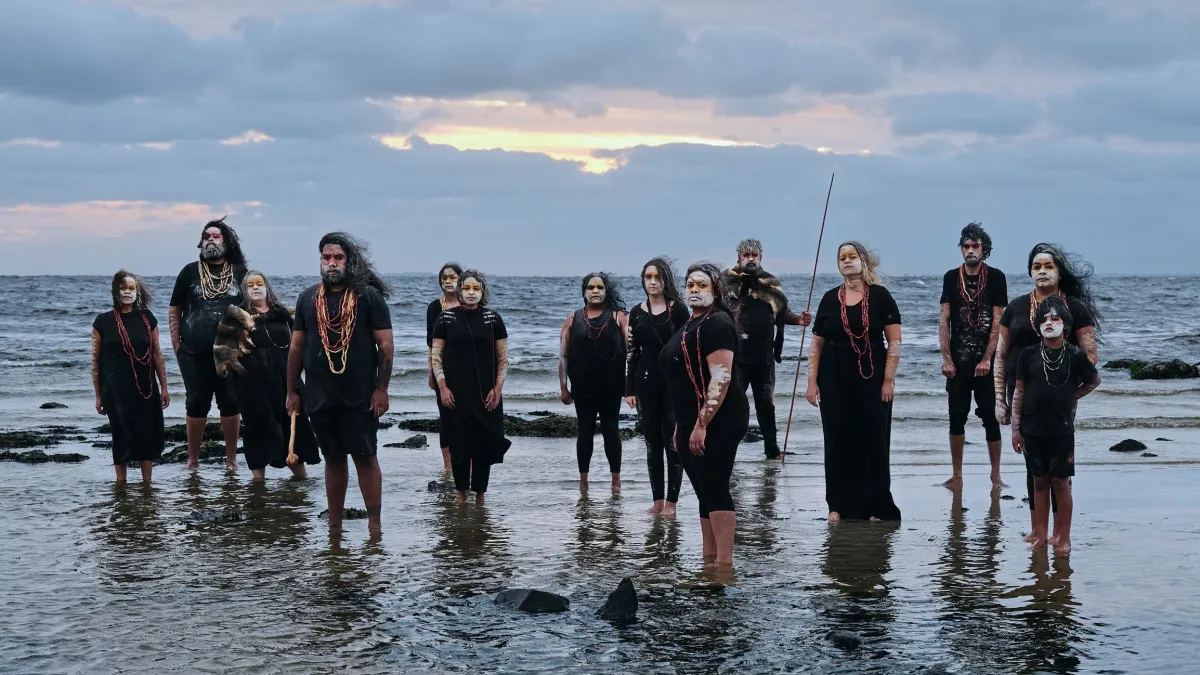
Ahead of their major exhibition at Town Hall Gallery, artists Maree Clarke and megan evans spoke with Lynette Russell AM, Sir John Monash Distinguished Research Professor at the Monash Indigenous Studies Centre. This extended interview gives insight into their practices and shared concerns, and the exhibition’s focus on the contemporary impacts of colonisation, the importance of truth-telling and the interconnectedness of culture and history in the process of collective healing.
Maree Clarke and megan evans are two powerful women; formidable Naarm-based artists, collaborators and unflinching truth tellers. In 2021 Victoria was the first Australian state to formally commit to a truth telling process as part of its pathway toward Treaty with First Peoples. At the centre of this effort is the Yoorrook Justice Commission, Australia’s first truth telling inquiry into the impacts of colonisation. What we have witnessed through this process is that truth and truth telling can be painful, disturbing and deeply uncomfortable.
In this exhibition Maree and megan explore the theme of Uncomfortable Truths. These two artists meet on the long fault line of the colonial frontier. Their lives have been intertwined for more than thirty-five years. Their friendship has become a braid, with strands crossing, relaxing and tightening. They have worked on many projects together and developed exhibitions pulsing with courage and provocation.
About the artists
For decades, Maree Clarke has been gathering the remnants, and threads of what was interrupted—calling back traditions pushed into shadow by invasion and colonisation. Her work flows like a river flood as she has worked with possum skins, kangaroo teeth, echidna quills and river reeds, bringing together the old and the new: glass, organic matter and 3D-printed shapes. With photography, sculpture and film, she brings to life stories and ceremonies, showing the deep, unbroken line of tradition and the wounds that still hurt behind it. Her work connects people from different generations, gently passing on precious information like flames held carefully in hands.
megan evans was born and raised on Wurundjeri Country. She is a fifth-generation settler Australian who has been conscious of the quiet, often unspoken weight of her family's history. She is ever cognisant of her ancestor’s complicity in the invasion and dispossession. Her art looks back at those who came before her, especially her great-grandmother, and the mark they made on the Traditional Owners of the land they lived on in the early 1800s. Her late husband, Les Griggs, was a Gunditjmara artist and a member of the Stolen Generation. Les’s presence threads through her practice like a low, steady drumbeat. His existence, his strength, and his pain are like a counter-melody to her own ancestry.
Together Clarke and evans show the complicated, difficult and vital facts that connect their past and ours. Within this work there is space for all of us, Indigenous, invader, settler and new arrivals.
Interview by Lynette Russell AM
You both are highly committed to the transfer of knowledge to younger generations. Can you speak about a particular project that you collaborated on that was especially meaningful for intergenerational communication?
Maree: When I started making art, I was making jewellery. I then came to Melbourne to paint the first green and gold tram to advertise the Koorie Heritage Trust. From there, I started looking in museum collections, shields, body adornments and implements for carving etc. I would then recreate those pieces I saw and passed that knowledge onto my family. I now work with my great nephew Mitch Mahoney on major projects and he has his own art practice and his sister Molly Mahoney who is making river reed necklaces. This is about keeping cultural practices alive. Mitch makes shields and coolamon scar trees on our traditional lands; we also collect the river reeds from Country.
megan: I see my role in relation to the younger generation is to educate them about the injustices of the past and how they continue to ripple into the present. I see my responsibility is to educate my own people which are part of the dominant culture.
However, with my own Aboriginal family I have a different role, that is to support them to flourish and resist the influence of whiteness and racism that they have to deal with daily. I am currently working on a project with my nephew that is a collaboration between him, my late husband and myself. This is very exciting for me as it is a family project but also a way to support him to enter the art world. Giving him confidence and opening doors for him and others is always a central role for me.
How has your work as curators influenced what you want to say as artists?
Maree: When Megan and I worked together at Wyndham Art Gallery, we curated an exhibition titled RACE. It was brilliant. You get to talk about those things nobody wants to talk about. What we did do for the opening was to have speakers from different language groups read the Universal Declaration of Human Rights. It is a powerful document and something more people should read and digest.
megan: I see it the other way around. I have been a curator for less time than I have been an artist. My ideas and passions as a curator have come from my commitments as an artist. Most of the things I pushed for within a Local Government run gallery over a 15-year period, were a reflection of the work I was doing in the studio.
Maree delves into the lingering effects of the trauma of colonisation, and the associated grief, megan’s work also comes from a place of loss and pain. How do you allow these perspectives to talk to each other?
Maree: Even though Megan and I have known each other for many years, worked together and made lots of great art, we have never had a collaborative exhibition. I think this exhibition ‘The Uncomfortable Truth’ is the perfect way to show our work and our history that will probably be very uncomfortable for some.
It’s quite emotional making this work having so much loss in my own family; my mother passed at 60, a brother was 60, two brothers in their 40s passed two weeks apart and one brother who was 30. Knowing my grandparents and great-grandparents lived out bush droving to make a living and my grandfather taught my mother how to read by going through the newspaper. They lived on the fringes of towns or on missions because they couldn’t live in town. In Balranald, we lived in a tent. My bed was a suitcase. We then moved to Munatunga Mission in Robinvale then onto Mildura into our first 3-bedroom house in town. So, we lived with our grandparents, an aunty and uncle and cousins; thinking back, it was never felt crowded. I can’t even remember where the boys slept, but my sister and I had a bed in our parents’ bedroom sleeping top n tail.
megan: Maree came up with the title for the show — The Uncomfortable Truth. I think we know one another's work enough for that to be an obvious fit. I see my work as being all about the uncomfortable truth of the occupation of this continent. My work is aimed at a non-Aboriginal audience. I like to think that people are attracted by the aesthetic of my work and then get a slap in the face metaphorically, in a way that wakes them up. Maree's work is a representation of the beauty, strength and resilience of her culture. Her tendency to 'supersize' her pieces is a note to the fact that to get the attention that her culture deserves, it has to be larger than life.
I also hope that when I use objects and items from a history that has been revered in the past, people will see that aesthetic differently, and in turn reflect on what the excess and materialism of that era actually meant to the people who were here before that aesthetic and value system dominated.
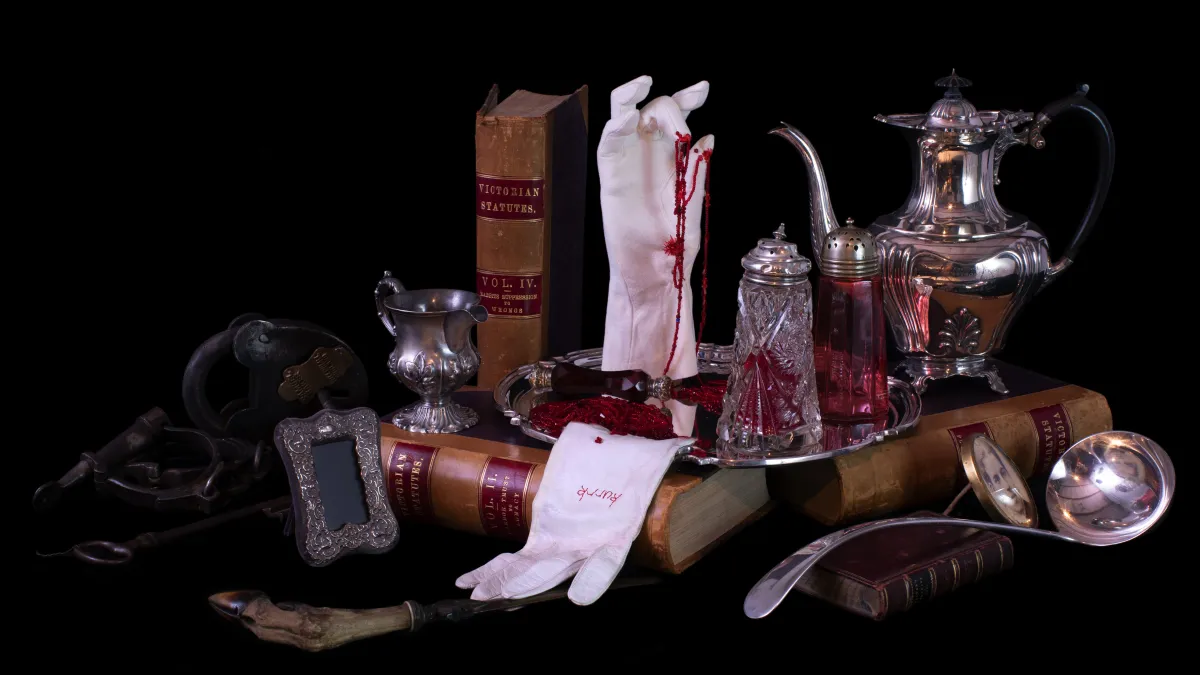
You describe yourselves as 'hailing from both sides of the frontier’, First Nations and settler/invader. However, the colonial frontier was porous, ever shifting, and inconsistent. Yes, it was violent and unfair, but sometimes we also see glimmers of hope, even occasionally of friendship. How do you conceive of the colonial frontier and configure these contradictions in your artistic practice?
Maree: I think the work I do in reviving cultural practices and passing that knowledge onto my family and community. Revival is essential because invasion meant many practices were kept quiet. Waking them up is an incredible thing to be able to do.
The process of colonisation was violent and unfair, but I don’t think that people know the full extent of what happened during the invasion. So, when I show my work that might look all beautiful and then you read the label that talks about the scale of the loss of land, language and cultural practices on this massive scale. For me that feels right. I love when my work moves people to tears, I feel like I got something right and that people are thinking about whatever it is that I’m talking about through my work.
megan: Both sides of the frontier are still evident in our contemporary lives. I have had 7 years of tertiary education. I had a mother who lived into her 90s. I own a house. And while these things are a minimum compared to some people's wealth of opportunity and material possession, they are a level of privilege that comes from the heritage I was born into. Australia has some of the wealthiest people in the world in its population yet Aboriginal and Torres Strait Islanders are materially its poorest. The rich and complex culture that is their birthright is loved and purchased by the wealthiest of Australians with little understanding of the gap and the ethics of maintaining that gap. People still complain that Aboriginal people are given privileges over 'ordinary Australians'! The majority of the population are ignorant of the frontier wars and the sovereignty of First Nations people. My work is sometimes deeply interrogative, even confronting, but I hope that it does shift people who aren't already educated about these issues - and get them to start to think.
Do you feel optimistic about the future?
Maree: Absolutely! I think you have to be, I am a pretty optimistic person, otherwise it would be a pretty sad state of affairs. I just have to believe that things will get better. And I know that art can facilitate healing and help on the journey to a better future. It's fantastic to see how many young people out there who have completed their art degrees and are working in the Arts. I love the work that I do around sharing cultural knowledge and creative art practices and I’m always looking at new ways to tell those tough stories through art. Sitting with my great nephew or niece problem solving how they are going to make that next artwork based on traditional practices.
megan: I am inherently optimistic otherwise I wouldn't be doing this kind of work. I have to think that art can change the world, and I do. Ever since Cathy Freeman said that the two men in chains on the Northcote Koorie Mural inspired her to run, I have been convinced that art matters. I have seen a lot change in the past 40 years and I hold out hope for a future of real equity.
What’s the difference between guilt and shame? Are either productive? Is guilt a necessary part of accountability? And does there come a point where guilt is no longer productive, and even destructive? What’s your take on Australia’s relationship to guilt, and shame, and how do you see these conversations manifest in your own work?
Maree: I don’t think that feeling guilty is very productive. Feeling shame would certainly be uncomfortable. I’m not trying to make people feel guilty; I’m trying to invite them to sit with the truth, even when it’s painful and challenging. Accountability is not about blame—it’s about making space for honesty, healing and a different future.
megan: I distinguish between guilt and shame. Guilt is not useful, in fact it is destructive. When someone is guilty what they are fundamentally saying is 'I am such a good person that I feel guilty'. It is really about the justification of the perpetrator. It shuts down conversations and often means the person who has been hurt is left to pick up the pieces and make the guilty person feel better.
Shame is natural and necessary. I felt shame and still do in some circumstances. Shame is a normal reaction to recognition of the ugly actions taken by colonisers - some of who we all may be related to - in the past. Shame washes over you like a wave and if you accept it, even embrace it, it leaves you with a space to be accountable, take actions that are appropriate. People talk about shame a lot in the comments books for my shows.
Reconciliation is a complicated word, that often positions the idea of healing as something for which each Australian shares equal responsibility. Do you feel that reconciliation is something you value? Do you think your work could be read as a form of reconciliation?
Maree: I feel like reconciliation is a shared responsibility, but we (Indigenous people) don’t have anything to reconcile. I think it’s others who need to come to terms with this. True reconciliation needs accountability, and healing cannot occur without truth-telling and structural change. If our work contributes to reconciliation, it is by refusing comfort and inviting honesty first. With honesty comes uncomfortable truth.
megan: Reconciliation is a word I shy away.
We (non-Indigenous people) need to reconcile with our past. Where we came from, whose land we occupied, often illegally. How do we reconcile ourselves as Australians. I believe that there is a fundamental lie that sits underneath Australian identity. If non-Indigenous Australians were able to truly reconcile with this 'uncomfortable truth' we could all have the privilege of belonging to a land and a culture that goes back over 65,000 years. I do hope that my work has furthered this kind of reconciliation.
Lynette Russell AM, Sir John Monash Distinguished Research Professor
‘The Uncomfortable Truth: Maree Clarke and megan evans’ will be on display at Town Hall Gallery from 4 November to 30 January 2027. Entry is free.
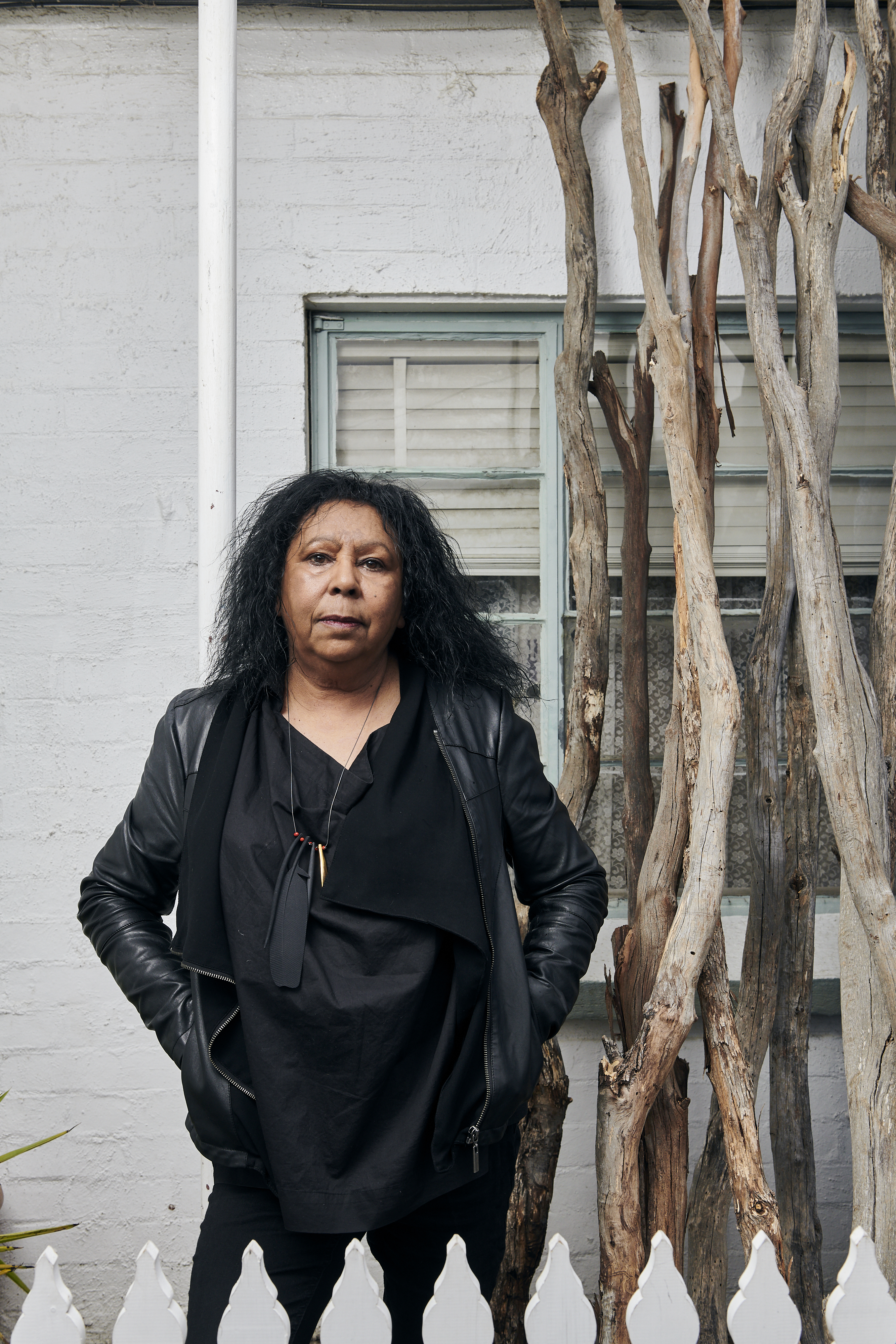
Maree Clarke. Photo: Eugene Hyland.
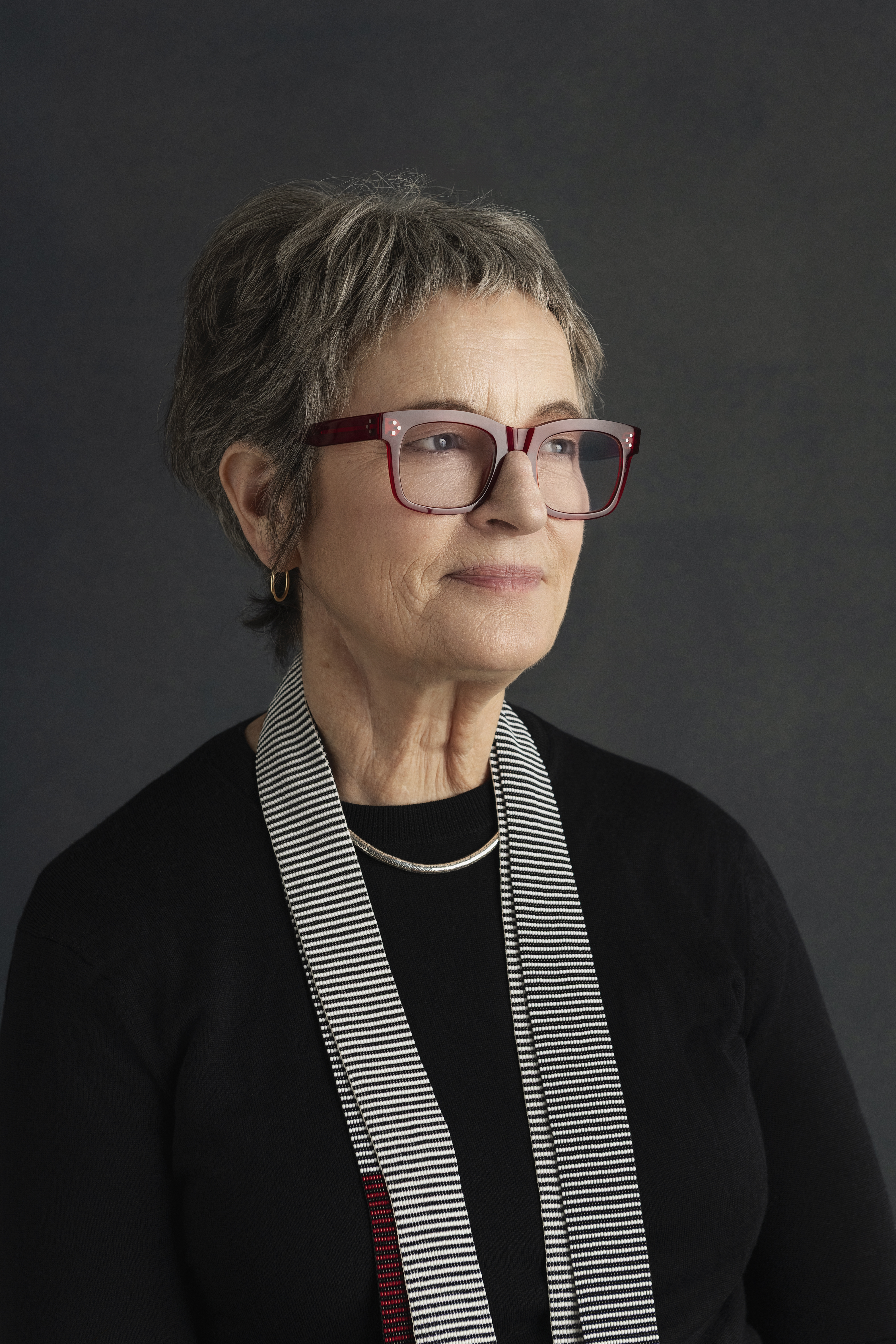
Megan Evans. Photo: Jody Haines.